● Tips are now live — tips@peoplevsbiloxi.com
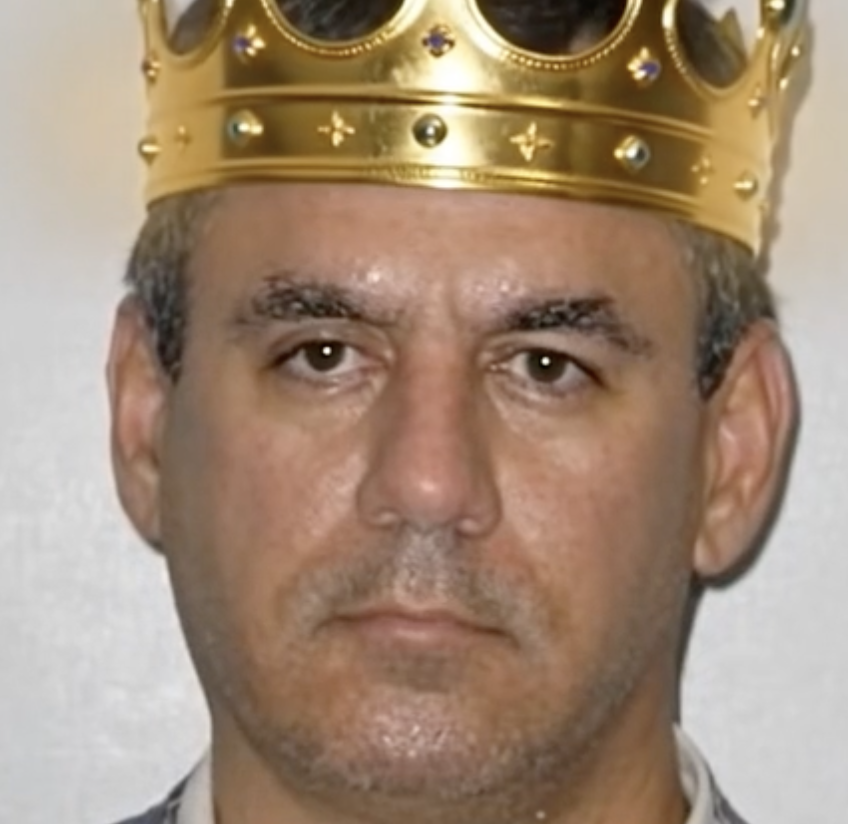
IN 2026, THEY'RE STILL AT IT.
Andrew "FoFo" Gilich.
The Mayor of Biloxi is in his early seventies. He is the Biden of Biloxi—a visibly declining public official clinging to the machinery of a government that long ago stopped waiting for his input.
His uncle, Mike Gillich Jr., was a Dixie Mafia kingpin convicted of ordering the murder of a state circuit court judge and his wife.
And his police department—the one that reports to him, the one run by a chief he personally appointed six weeks earlier—just issued a department-wide intelligence bulletin targeting a citizen for painting "FOFO IS A MOFO" on the wall of his own property.
The bulletin distributed that citizen's Social Security number to every officer in the department. His home address. Four vehicles. His Facebook photo.
And then it gave the instruction that makes your stomach turn: "develop probable cause to initiate enforcement contact."
Not investigate a crime. Not respond to a complaint. Develop probable cause.
Find a reason. Manufacture one if you have to. The target has been selected. Now go build the case backwards.
That's not policing. That's a political hit list with a badge on top.
Spoiler: we've seen this before.
This is the city where the Dixie Mafia bought the Sheriff's Office with cash and cocaine.
Where the FBI designated the entire Harrison County law enforcement apparatus a criminal enterprise—in 1983.
Where a Dixie Mafia lawyer named Pete Halat became Mayor of Biloxi, then went to federal prison for eighteen years.
Where a sitting state judge and his wife were murdered in their own home because she was about to expose corruption at city hall.
Where the Council President who ordered a journalist physically removed from a public meeting works for Lodging & Leisure Investments—and has never recused himself from a single vote benefiting his employer.
Same city. Same institutional reflex. Same family, in some cases—literally.
Before we go any further, the undersigned wants to say something — and God and every person who reads this website knows that the undersigned does not lie or save words when it comes to talking about people.
The undersigned has had interactions with the Biloxi Police Department before. On Connell Avenue. On Division Street. They responded to homeless issues at our properties. We've been pulled over. We've dealt with officers in the field, face to face, person to person.
And here's the thing — can we be honest?
The people who work there are great.
The officers. The rank and file. The men and women who put on the uniform and show up. The undersigned has nothing but respect for the individual officers of the Biloxi Police Department. They are professional. They are courteous. They do their jobs. And there are concerned officers among them — good people trapped in a bad chain of command. We know some of them personally. They deserve better than this.
Some of them report that they have never before been asked to participate in code enforcement operations. That they are being used to run personal errands for the Mayor. That the line between police work and political work has been erased — and they didn't sign up for that.
The problem is not the people. The problem is the chain of command.
The problem is how willing the leadership is to weaponize good officers against citizens who exercise their constitutional rights. The problem is a Mayor who screams "take them out" and a Chief who obeys without asking why. The problem is a CIU bulletin that turns every patrol car into a surveillance tool and every officer into an unwitting instrument of political retaliation — officers who didn't ask for this, didn't sign up for this, and in at least one case, refused to be part of it by making sure the bulletin reached the person it was designed to destroy.
This article is not about the Biloxi Police Department. This article is about the people who command it.
What you are about to read is the story of how Biloxi's political class has been trying to be the mob for sixty years.
How the tools changed—from bullets to badges, from cash payoffs to CIU bulletins—but the intent never did: silence the person who exposes the corruption.
How a brand-new Police Chief racked up nineteen federal causes of action in his first seventy days on the job. How the Mayor's own uncle ordered a judge murdered, and how the Mayor's own police department now targets citizens for painting walls.
And how, once again, the FBI has been notified—because last time, it took the FBI to stop it.
The undersigned has time. Let's start at the beginning.
Chapter 1: The Dixie Mafia Ran This Town
Before we talk about what the Biloxi Police Department did on March 31, 2026, we need to talk about what it's been doing since the 1960s.
Because the CIU bulletin is not an aberration. It is a recurrence. And if you don't understand the history, you'll make the mistake of thinking this is about a painted wall.
It was never about the wall.
The Dixie Mafia headquartered itself in Biloxi, Mississippi. Not metaphorically. Not tangentially. This was home base.
The Gulf Coast—and specifically a stretch of beachfront nightclubs, strip joints, and gambling dens known as "The Strip"—was the operational center of organized crime in the American South from the 1960s through the 1980s. Drugs, gambling, prostitution, extortion, murder. All of it running through Biloxi like the humidity.
If you've ever driven Highway 90 through Biloxi and wondered why a small coastal city has the infrastructure of a place three times its size—the casinos, the hotels, the inexplicable density of money sloshing around a town of fifty thousand people—this is why.
The Strip was a cash machine. It attracted organized crime the way a carcass attracts vultures: reliably and in great numbers. And unlike the Italian Mafia up north, the Dixie Mafia didn't operate through a rigid hierarchy. It was a loose confederation of criminals bound by geography, opportunity, and the reliable cooperation of local law enforcement.
And that last part—the cooperation of law enforcement—was their primary method. It was not what you'd expect.
The Dixie Mafia didn't just bribe cops. They didn't just buy off a deputy here and there and hope for the best.
They did something far more elegant and far more devastating: they became law enforcement. They bought entire agencies. They placed their people inside the machinery of government—as sheriffs, as deputies, as officers of the court—and then they operated the machinery from the inside.
FBI Historical Assessment
"The Dixie Mafia was especially notorious for infiltrating law enforcement agencies. Members could easily use patronage, influence-peddling, and money to obtain jobs as sheriffs and sworn deputies."
Read that again. Patronage. Influence-peddling. Money. Not guns. Not threats. Jobs.
The Dixie Mafia bought law enforcement the way you buy a franchise. You invest in the right people, put them in the right positions, and then the machinery works for you. The badge doesn't change. The uniform doesn't change. The department name stays the same.
But the people inside it now answer to someone other than the public.
Sound familiar? It should.
The Sheriff Who Sold His Office
Leroy Hobbs was the Sheriff of Harrison County—the county that contains Biloxi. He didn't just fail to uphold the law. He operated the criminal enterprise from the Sheriff's Office.
"They were doing anything and everything illegal down here. For money, the sheriff and officers loyal to him would release prisoners from the county jail, safeguard drug shipments, and hide fugitives."
Hobbs was charged in a 28-count federal indictment. He pleaded guilty to two counts: racketeering and arranging the release of two county prisoners for $29,500.
That's what a prisoner's freedom cost in Harrison County. Twenty-nine thousand five hundred dollars. Cash. To the Sheriff. Who let them walk.
He was sentenced to twenty years.
Let the scale of that sink in. This wasn't a deputy taking an envelope on the side. This was the top law enforcement officer of an entire county running a criminal franchise from behind his own desk.
Prisoners bought their way out. Drug shipments moved under police escort. Fugitives hid in plain sight because the man who was supposed to catch them was on the payroll of the men who employed them.
But here's what separates the Dixie Mafia from common corruption. When the walls started closing in—when a man named Larkin Smith turned over information to the Justice Department that would eventually lead to Hobbs' conviction—the Sheriff didn't hire a lawyer. He didn't plead the Fifth. He didn't resign.
He tried to have Smith assassinated.
That same year—1983—federal authorities did something extraordinary. Something that had no precedent in South Mississippi and has had no equal since.
They designated the entire Harrison County Sheriff's Office as a criminal enterprise.
Not a few bad apples. Not a handful of corrupt deputies. The entire department. The FBI looked at Harrison County law enforcement and concluded that the rot wasn't inside the institution. The rot was the institution.
"It was out of control."
Three words. From the FBI agent who lived it. It was out of control.
The Kingpin of Point Cadet
Mike Gillich Jr. operated from Point Cadet—the Croatian-American enclave on the eastern tip of Biloxi's peninsula. He ran The Strip. He was the banker, the broker, and the order-giver. When the Dixie Mafia needed something done, it went through Gillich.
Who Was Mike Gillich Jr.?
"Mr. Mike runs the criminals' post office. He's their banker." Gillich was convicted in 1991 for his role in ordering the Sherry murders. He was sentenced to 20 years in federal prison. He was from Point Cadet, Biloxi. He was Croatian-American. And he was Andrew "FoFo" Gilich's uncle.
We'll come back to that last detail. We promise.
The Lawyer Who Became Mayor
The Dixie Mafia didn't just buy sheriffs. They built a pipeline.
Pete Halat was the Dixie Mafia's lawyer. He handled the money. He was, in the parlance of organized crime, the fixer—the man who made problems disappear through the legal system instead of through the barrel of a gun.
He was entrusted with money belonging to Kirksey McCord Nix Jr., another Dixie Mafia figure. And Halat spent it.
When the money went missing—more than $100,000—Halat needed someone to blame. He pointed the finger at Judge Vincent Sherry, a sitting state circuit court judge. The lie worked. The mob believed it. And the mob gave the order.
But before we get to what happened next, consider this: Pete Halat—the Dixie Mafia's own attorney, the man who stole from the mob and blamed a judge—went on to become the Mayor of Biloxi.
A Dixie Mafia lawyer. Mayor. Of Biloxi.
He was convicted in 1997 and sentenced to eighteen years in federal prison.
The pipeline ran from the Strip to the Mayor's Office. From organized crime to city hall. The man who fixed problems for the mob fixed them for the city too—until the FBI fixed him.
Take a moment with that pipeline. A criminal organization's in-house counsel became the mayor of a Mississippi city. Not in secret. Not through some shadowy back-channel appointment. Through an election.
The voters of Biloxi chose the Dixie Mafia's lawyer to run their city—because by the time the elections came around, the machine had been so thoroughly embedded in the community that the voters didn't know the difference between a public servant and a consigliere.
SEPTEMBER 14, 1987
Judge Vincent Sherry was a sitting state circuit court judge. His wife, Margaret Sherry, was a former Biloxi City Councilwoman. They lived in their home in Biloxi. They had children. They had careers built on public service. They had every reason to believe they were safe.
Margaret Sherry was not safe. She had been gathering evidence. She had been connecting the threads.
The proven trigger for the murders was internal—Pete Halat stole from the mob and blamed Judge Sherry, and Kirksey Nix ordered the hit from prison. But Margaret Sherry was a former councilwoman who had been talking to the FBI about corruption in city government. She wanted to clean house. She was, in the words of those who knew her, determined to expose the financial arrangements and patronage networks that connected organized crime to public office. She was collateral damage in a system that destroys the people who threaten it.
She was going to do what peoplevsbiloxi.com does every week.
On the night of September 14, 1987, Judge Vincent Sherry and Margaret Sherry were murdered in their home.
A sitting state circuit court judge. Killed. A former councilwoman who was about to blow the whistle on city hall. Killed. In their own house. In Biloxi, Mississippi.
Because she was going to talk.
Halat blamed Judge Sherry for the missing money. Gillich gave the order. The Dixie Mafia sent the killers.
And when it was over, the judge and the councilwoman were dead on the floor of their own home, and the corruption machine kept running for another decade before the FBI finally dismantled it.
The undersigned does not make jokes about this.
Margaret Sherry was murdered because she was going to expose what the people in power were doing.
That is not a historical curiosity. That is not a footnote in a Wikipedia article about organized crime in the Deep South. That is the foundational act of political violence in this city's modern history.
A woman tried to tell the truth about Biloxi's government, and the government's allies murdered her for it.
The tools changed. In 1987, the tool was a gun. In 2026, the tool is a CIU bulletin with a citizen's Social Security number distributed to every officer in the department.
The weapon changed. The intent did not.
Silence the person who exposes the corruption.
That is the institutional reflex of Biloxi, Mississippi. It has been the reflex for sixty years.
It was the reflex when the Dixie Mafia ran The Strip. It was the reflex when the Sheriff sold prisoners for cash. It was the reflex when a judge and his wife were murdered in their home.
And it is the reflex now—on March 31, 2026—when a police intelligence unit is deployed against a citizen who painted four words on a wall.
The FBI Stopped It. Once.
It took the Federal Bureau of Investigation to break the cycle. Not local leadership. Not the state of Mississippi. Not internal reforms or oversight boards or good governance initiatives. The FBI.
"The majority of citizens realized that if the FBI had not stepped in, the lawlessness and corruption would likely have continued unabated."
Would have continued unabated. Not might have. Not could have. Would have.
The FBI's own assessment is that without federal intervention, Biloxi's law enforcement would still be operating as an arm of the Dixie Mafia. The citizens of Harrison County could not fix it. The state of Mississippi would not fix it. Only the FBI could.
Retired Special Agent Keith Bell returned to his hometown to do it:
"It meant a lot to me to return to my home and do something about the corruption that had worked its way into government and law enforcement there."
The honest officers inside the department helped him do it. That detail matters.
The FBI didn't do it alone. There were people inside the system—good cops, real cops, officers who remembered what the badge was supposed to mean—who fed information to the FBI and helped dismantle the machine from the inside.
The Parallel
In 1983, honest officers inside a corrupt department helped the FBI expose the criminal enterprise operating under the color of law.
In 2026, someone inside the Biloxi Police Department made sure a CIU bulletin—targeting a citizen for political speech, distributing his Social Security number to every officer—reached the person it was designed to destroy.
The FBI has been notified. The bulletin is now Exhibit C to a federal complaint. The same agency that stopped it in 1983 has the report on its desk.
There were plenty of honest officers on the force in the 1980s, and some would later help the FBI put an end to the culture of corruption. The FBI said so. It's on their website.
And here we are, forty-three years later, and someone inside the Biloxi Police Department looked at a CIU bulletin that instructed officers to "develop probable cause" against a citizen for painting a wall—a bulletin that distributed that citizen's Social Security number to the entire department—and decided that this was not what the badge was for.
Whoever you are: the undersigned sees you. The tradition you're part of is older than the corruption you're fighting. And unlike 1983, you won't have to wait for a book deal to find out how it ends.
Because here's what's different this time. In 1983, there was no peoplevsbiloxi.com. There was no seventy-thousand-reader audience watching in real time. There was no federal exhibit number attached to the document within twenty-four hours.
The honest officers of the 1980s had to trust the FBI blindly, with no guarantee that their courage would produce results before the machine caught up to them.
The honest officer of 2026 has something Keith Bell's informants never had: an audience. A record. A website that publishes what the department tries to bury.
The FBI has our report. The fifth federal lawsuit is filed. And seventy thousand readers are watching.
Now. Let's talk about the kingpin's nephew.
The Nephew
Andrew "FoFo" Gilich.
Mayor of Biloxi. In his early seventies. Nephew of Mike Gillich Jr.—the Dixie Mafia kingpin convicted of ordering the murder of a sitting judge and his wife.
Shared patriarch: Michael Joseph "Chicago Mike" Gilich, born 1887 in a Croatian fishing village, died 1972 in Biloxi. One branch of the family went into organized crime. The other branch went into politics.
Reader, we invite you to spot the difference.
Because we can't.
Mike Gillich Jr. ran an empire. Drugs, gambling, murder-for-hire, the entire Sheriff's Office on the payroll. Dark? Absolutely. Competent? Undeniably.
The man controlled the most profitable criminal enterprise in the American South for two decades. You don't do that by accident. You don't do that by screaming at city council meetings. You do that by being smart—ruthless, calculated, and smart.
FoFo can't run a city council meeting without ejecting a journalist.
Let that breathe for a second. The nephew of a man who ran the most feared criminal network in the Southern United States—and the best FoFo can do is send code enforcement to harass property owners and deploy the police intelligence unit against a painter.
That's not organized crime. That's disorganized government.
The Dixie Mafia would file a cease and desist for tarnishing the brand.
Let's talk about what happened to the family business. Because the trajectory here is—how do we put this gently—humiliating.
In the 1970s, a Gilich was running the Strip. Cocaine. Gambling. Political assassinations. An operation so sophisticated that the FBI had to designate an entire Sheriff's Office as a criminal enterprise just to get a foothold.
Mike Gillich Jr. had omerta. He had discipline. He had a system where the law enforcement officers he purchased stayed purchased, the money moved invisibly, and the only people who talked ended up in the Gulf of Mexico.
In 2026, a Gilich is running City Hall. And what's the operation?
Code enforcement. Code enforcement.
The family went from cocaine to building permits. From ordering hits on circuit court judges to ordering CIU bulletins on a guy who painted a wall. From the Golden Nugget to a Tuesday night council meeting in a city smaller than a homecoming crowd.
The Corleones had omerta. Biloxi has Jerry Creel testifying under oath that Pete Abide directed everything.
Mike Gillich Jr. would be embarrassed.
But here's where it gets really fun, dear reader. Here's the question the entire city should be asking, and nobody in that council chamber has the spine to say out loud:
Who is actually running Biloxi?
Because it sure as hell isn't FoFo.
Watch the man. Watch the clip from March 3rd—they posted it to YouTube themselves, because they're not just corrupt, they're dumb.
Watch FoFo get up from that chair. Watch the confusion. Watch the rage that has no direction. Watch a man who can't compose a sentence under pressure issue a command that will cost his city another federal lawsuit.
"Take them out! Take them out!"—screaming in his forced mafioso voice like a dinner theater Vito Corleone who forgot his lines.
We called him the Biden of Biloxi in March and we weren't joking. FoFo is deteriorating—visibly, publicly, on camera—and the machinery of city government is running on autopilot around him.
The question isn't whether he ordered the CIU bulletin. The question is whether he could. Whether the man can even process what the letters C-I-U stand for before his afternoon nap kicks in.
This is the Mayor of a city. Not a large city. Not a consequential city. A city of 50,000 people—population less than a college football stadium—and even that is apparently too much for FoFo to handle without the wheels coming off in public.
Imagine this man running Houston. Imagine this man running a Chili's. He'd be fired by the regional manager before the lunch rush. But in Biloxi, he's the mayor. Because in Biloxi, the bar is underground.
The FoFo Dilemma
Option A: FoFo personally ordered the Criminal Intelligence Unit to create a department-wide bulletin targeting a citizen for painting a wall. In which case, the Mayor of Biloxi is a tyrant who weaponizes police intelligence against political speech.
Option B: FoFo didn't know about it. The bulletin was created, distributed to every officer in the department, and loaded with a citizen's Social Security Number—and the Mayor of Biloxi had no idea. In which case, he's not in charge of his own city.
Either way: Unelected operatives are running Biloxi. Pick your poison, FoFo.
So who is running this city? Let's inventory the candidates.
Peter Abide. Director of Legal Affairs. Pulls down $566,000 a year. Not a city employee—a contractor. No civil service protections, no accountability, no public oversight.
Just a man with a contract and a blank check who directs building officials, supervises code enforcement, and controls every piece of litigation that flows through City Hall. Jerry Creel told a federal court under oath: "Pete Abide directed me."
That's not speculation. That's testimony.
Christopher De Back. Chief of Police. Appointed January 20, 2026. Within seventy days: expelled a journalist from a public meeting and presided over a department that created a political intelligence bulletin. More on him in a moment. A lot more.
Michael Whitehead. Defense counsel. Was physically present at 929 Division Street the day the CIU bulletin was created. The bulletin references "3rd party information." We'll let you connect the timeline yourself.
Three unelected men.
A half-million-dollar contractor who isn't technically an employee. A police chief who's been on the job less time than a probationary hire at Waffle House. And a defense attorney who shows up at your property on the same day the police department puts your Social Security Number in a department-wide intelligence briefing.
And the Mayor? FoFo is in the chair. Rubber-stamping orders. Sundowning at City Hall. The puppet whose strings are fraying while the puppeteers pretend everything is fine.
We said it in the Burger King article and we'll say it again: maybe don't scream "take them out" on camera at a public meeting. Just a thought, FoFo.
But here's what makes the nephew angle something more than genealogy trivia. It's not guilt by association. We're not saying FoFo is a gangster because his uncle was a gangster. We're saying the institutional reflex is identical. Same family. Different decade. Same response to exposure: deploy the police.
Margaret Sherry was about to expose corruption in city hall. The Dixie Mafia sent a hit squad to her home.
This website exposes corruption in city hall every week. The current administration sent a Criminal Intelligence Unit bulletin to every officer in the department.
The tools changed. Bullets became badges. Hit squads became CIU bulletins.
But the reflex—the institutional DNA, the Pavlovian response to criticism—is exactly the same. Someone talks? Shut them up. Someone publishes? Target them. Someone paints "FOFO IS A MOFO" on a wall? Distribute their Social Security Number to every cop in the city.
Progress, we suppose. At least nobody got shot.
Yet.
The Dixie Mafia at least had ambition.
FoFo's version can't even manage a code enforcement case without getting caught lying under oath, can't hold a city council meeting without assaulting the press, and can't handle a painted building without activating the intelligence apparatus of the entire police department.
Wannabe mobsters who forgot that everything in government is documented. Every email. Every directive. Every bulletin. Every officer who received it. Every database it's stored in. Every court it can be filed in.
The family business went from cocaine to code enforcement, but the management style didn't change. The only difference is that the current generation is worse at it.
FoFo, you're running a city with the GDP of a gas station, you've got five federal lawsuits pending, your building official can't keep his story straight, your legal counsel is a half-million-dollar ghost, your police chief has been on the job since January and is already a federal defendant.
And your answer to criticism is to send the intelligence unit after a man who painted a building.
Your uncle Mike at least knew when to keep his mouth shut. You can't even manage that.
The (please) Stay Back Police Chief
Christopher De Back.
Or as we'll be calling him from now on: the (please) Stay Back Police Chief.
His name is literally a warning label and he ignored it.
Appointed Chief of Police on January 20, 2026. Named as an individual defendant in Petrini & Fusco v. Glavan et al., Case No. 1:26-cv-00094-HSO-BWR, Southern District of Mississippi. Nineteen counts. Seven defendants. And the Chief earned his spot on that caption in seventy days.
That's roughly one cause of action every 3.7 days. Congratulations, Chief.
Let's walk through it. Because the timeline is the argument.
Christopher De Back appointed Chief of Police, City of Biloxi. A new appointment. Not an inherited chief carrying out longstanding policy. A fresh hire. Still warm in the chair. Still learning where the bathrooms are.
De Back personally seizes journalist Jarrod Lewis Fusco from a public city council meeting. Fusco is a credentialed journalist. A Society of Professional Journalists member. He was attending an open, public meeting of the Biloxi City Council. He said exactly three words: "point of order"—parliamentary procedure. Standard. Unremarkable. Protected.
FoFo's response: "Take them out."
De Back's response: He did it.
No statute cited. No rule cited. No ordinance violated. No arrest. No charge. No probable cause. No reasonable suspicion. Just a verbal command from the Mayor and a Police Chief who followed it like it was a lawful order.
CIU bulletin created and distributed department-wide targeting Yuri Petrini for painting "FOFO IS A MOFO" on private property. The Criminal Intelligence Unit of the Biloxi Police Department—under the authority of Chief Christopher De Back—produced and distributed a bulletin containing a citizen's Social Security Number, home address, vehicle information (including a non-party's car), Facebook photograph, and instructions to "develop probable cause to initiate enforcement contact."
For painting a wall.
Two acts. Same chief. Same quarter.
Physical force against a journalist at a public meeting. Intelligence apparatus deployed against a citizen for political speech. Day 42 and Day 70.
That's the arc of De Back's first ten weeks as Chief of Police: from public servant to political enforcer, measured in calendar days.
Most chiefs go seventy days without a single federal lawsuit. The (please) Stay Back Police Chief couldn't go seventy days without becoming a constitutional case study.
When FoFo said "take them out," the (please) Stay Back Police Chief should have done exactly what his name says. He should have stayed back.
He should have turned to the Mayor and said: Sir, this is a public meeting. This man is credentialed press. He said three words of parliamentary procedure. I cannot and will not remove him without a lawful basis.
That's what a Police Chief does. That's the entire job description in one sentence: know the law, follow the law, refuse unlawful orders. It's not complicated. They teach it at the academy. It's in the oath.
Instead, De Back stepped forward. Into a public council chamber. Past the cameras. Past the audience. Past the law.
And he physically removed a credentialed journalist from a public government meeting because a seventy-something mayor who can't finish a sentence told him to.
A credentialed journalist. Removed by the chief of police. At the verbal command of a visibly declining mayor. Without citation to a single law.
Read that again.
A credentialed journalist with two decades of professional experience was physically seized at a public government meeting by a chief of police who has been on the job for forty-two days.
Fusco has more professional experience than De Back has been chief by a factor of about a hundred. And De Back is the one giving orders.
In Biloxi, the man with six weeks of tenure overrides the man with two decades of professional experience. That's how this town works.
That's not City Hall. That's a crime scene with parking.
And then came Day 70. The CIU bulletin. We'll dissect the bulletin itself in the next chapter—every line of it, every contradiction, every piece of personal data they handed to every officer in the department. But for now, understand what it means for De Back's tenure.
He didn't inherit this. He wasn't a career chief managing a department that had always done things this way.
He was appointed six weeks before the Fusco expulsion. Ten weeks before the CIU bulletin. This was a new chief, executing new directives, from the very beginning of his appointment.
The question isn't what went wrong. The question is whether anything was ever intended to go right.
Was Christopher De Back appointed to be a Police Chief? Or was he appointed to be a political enforcer?
Because the record says enforcer.
Two documented acts of political enforcement in seventy days. Zero documented acts of refusing an unlawful political directive.
A perfect record—if your job is to do whatever FoFo says. He did exactly what FoFo told him to do. And that's exactly why he's getting sued.
That's not a Police Chief. That's a liability generator with a badge.
The Pipeline
In the 1980s, Pete Halat went from Dixie Mafia lawyer to Mayor of Biloxi. The criminal enterprise didn't capture the mayor's office by force. It grew one of its own into the chair.
In 2026, Christopher De Back went from new appointee to political enforcer in seventy days. The administration didn't corrupt a veteran chief. It appointed a new one and put him to work immediately.
Biloxi's institutions don't corrupt slowly. They corrupt on contact.
The case name tells you everything you need to know. Petrini & Fusco v. Glavan et al.
Not Gilich. Not the City. Not De Back. Glavan.
Because Kenny Glavan is the one who opened his mouth, couldn't cite a rule, ordered the removal, and put the machinery in motion. The Burger King is first on the caption because he was first to the microphone. De Back is named because he followed the order. FoFo is named because he gave it.
And the video? It's on the City of Biloxi's own YouTube channel. Video ID: G0adfk2i9KA.
They recorded a Police Chief executing an unlawful seizure of a journalist at a public government meeting, then uploaded the evidence to the internet themselves, then left it up.
They posted it themselves. Because they're not just corrupt—they're dumb.
Nineteen counts. Seven defendants. Filed in the Southern District of Mississippi.
And the (please) Stay Back Police Chief is one of them—named in his individual capacity. His name. His liability. His problem.
Seventy days on the job and he's already a federal defendant.
His name told him what to do. He didn't listen. Now he has nineteen counts explaining it to him in writing.
Stay Back got nineteen counts for stepping forward.
The Bulletin
Here it is.
This is the document that the Biloxi Police Department's Criminal Intelligence Unit created on March 31, 2026 and distributed to every sworn officer in the department via the electronic records system. This is Exhibit C to the federal complaint filed the very next day. This is now a permanent public court record in Petrini & Fusco v. Glavan et al., Case No. 1:26-cv-00094-HSO-BWR, Southern District of Mississippi.
And this is what a city government looks like when it deploys its police department as a political weapon.
Let the document speak for itself. We'll annotate.
The bulletin was created on March 31, 2026 — the same day the words "FOFO IS A MOFO" appeared on the wall of 929 Division Street.
Not a day later. Not after some deliberative review process. Not after consultation with the City Attorney's office about whether a painted wall constitutes a criminal threat.
Same day.
Paint goes up in the morning, intelligence bulletin goes out to the department by afternoon. That's not policing. That's a reflex. A political reflex dressed up in law enforcement letterhead.
The bulletin contains the following information about a private citizen whose crime was painting a wall:
Yuri Petrini's full Social Security Number. Not partially redacted. Not the last four. The whole thing.
Distributed electronically to every officer in the Biloxi Police Department. In a permanent record. With no recall mechanism. No expungement procedure. No sunset clause.
Every officer in the department now has a citizen's Social Security Number in a permanent electronic record. No recall mechanism. No expungement.
Because he painted a wall.
The bulletin contains a photograph extracted from Petrini's Facebook profile. It contains a physical description. It contains his home address. And it contains four vehicles, catalogued with license plates and VINs.
But the real masterpiece — the part that tells you everything about how this department thinks — is the two contradictory instructions embedded in the same document.
Instruction one:
From the CIU Bulletin — Exhibit C, Federal Complaint
"Develop probable cause to initiate enforcement contact."
Read that again.
"Develop probable cause." Not "respond if probable cause arises." Not "be aware of this individual in the event of a lawful encounter." Develop probable cause.
That is an instruction to find a reason. To manufacture a pretext. To go looking for something — anything — that justifies contact.
It is a directive to work backwards from a conclusion. You don't "develop" probable cause. Probable cause exists or it doesn't. It arises from observed facts, not from a department-wide memo telling officers to go generate it.
That's proactive targeting. That's a department demonstrating the desire to initiate issues where none exist. That's the police department saying: we want this man contacted, and we need you to figure out the legal excuse for why.
Instruction two:
Same Document. Same Page.
"Do not stop or detain."
There it is. Both directives on the same piece of paper. Develop probable cause to initiate enforcement contact — but do not stop or detain.
Those are not compatible instructions. They cannot coexist.
You cannot tell every officer in your department to go find a reason to make contact with a citizen and then, in the same breath, tell them not to stop or detain him.
Unless the first instruction is the objective and the second instruction is the insurance policy.
The first is proactive targeting. The second is a liability shield. The department wants the harassment but not the accountability.
This bulletin wasn't issued because Yuri Petrini committed a crime. No crime is alleged in the document. No warrant is referenced. No statute is cited.
The triggering event — the only event — is a painting on private property that criticized the Mayor of Biloxi.
And the city's response was to activate the Criminal Intelligence Unit — the unit that exists to track organized crime, narcotics trafficking, gang activity — to create a department-wide dossier on the painter.
The bulletin references "3rd party information" as its source. The article will not identify who that third party is.
But the timeline is public record: defense counsel Michael Whitehead arrived at 929 Division Street within one hour of the painting's appearance and demanded its removal. The bulletin was distributed to the department the same day.
Readers may draw their own conclusions about the chain of events.
And now, because the complaint was filed on April 1, 2026, this bulletin is no longer a confidential internal document.
It is Exhibit C to a federal civil rights complaint. It is a public court record.
Every officer in the Biloxi Police Department already has this citizen's Social Security Number. Now the public has the bulletin that put it there.
Sunlight is the best disinfectant. The documentation folder grows thicker.
The Boss Behind the Boss
Editor’s Note (April 5, 2026):
A portion of this section identified the Lodging & Leisure developer as a disbarred attorney convicted of federal extortion. Subsequent investigation identified evidence that these may be two individuals with similar names (Joe Gregory Stewart vs. Gregory Scott Stewart). See full correction on The Burger King article. The conflict-of-interest analysis — Glavan voting on ordinances that benefit his employer — is unaffected by this correction and remains fully documented.
Let's talk about who Kenny Glavan works for.
Not the people of Ward 6 — we've established that. Not the Biloxi City Council — that's just the stage where he performs.
We mean his actual employer. The man who signs his actual paycheck. The man whose hotels Kenny protects with his council votes.
The man whose name appears on the corporate filings of Lodging & Leisure Investments LLC, headquartered at 195 Beach Boulevard — the same address as the Margaritaville Resort, that 23-story, 371-room tower on the Biloxi beachfront.
His name is Joe Gregory "Greg" Stewart.
Greg Stewart is a disbarred attorney.
Greg Stewart was federally convicted of conspiracy to commit extortion under color of official right — that's the Hobbs Act, for the legally curious. The federal statute that makes it a crime to obtain property or services through corruption of a public official.
And here's what he did.
The Federal Conviction
Greg Stewart paid a Tunica County sheriff's deputy — a man named Ferrell Hunter — to absent himself from justice court proceedings, causing five DUI cases to be dismissed.
He was sentenced to a $20,000 fine and three years of federal probation.
He was disbarred in 2004 by the Mississippi Bar.
Let's make sure we understand what happened here.
A lawyer — an officer of the court — paid a sheriff's deputy to not show up to court, so that DUI cases would collapse for lack of a witness. Five of them.
Five people who were charged with driving under the influence had their cases disappear because Greg Stewart purchased a law enforcement officer's absence.
He didn't beat the cases on the merits. He didn't argue the breathalyzer was miscalibrated. He didn't invoke the Fourth Amendment. He bought the deputy. And five drunk drivers went free.
The Mississippi Bar disbarred him. The federal government convicted him.
And then — because this is Mississippi and nothing is ever truly over — Greg Stewart petitioned the Mississippi Supreme Court for reinstatement. Four times.
Denied. Four times.
And on the second petition, in 2011, the Supreme Court didn't just deny him — they found that Stewart had answered falsely to the Bar and refused to disclose information.
The Court's own language: "candor lacking."
A disbarred attorney convicted of corrupting law enforcement lied to the Bar when trying to get his license back, and the Court caught him. And he tried two more times after that.
Four petitions. Four denials. The man does not take hints.
Now. Here's where it gets cosmic.
Kenny Glavan — the Burger King himself, the Council President of Biloxi, the man who ordered a journalist removed from a public meeting, the man who couldn't cite a single rule for why — works for Greg Stewart.
Not tangentially. Not as a distant vendor.
He is the Area Director of Hotel Operations at Lodging & Leisure Investments LLC. Stewart's company. Stewart's hotels. The Margaritaville. The White House Hotel. Hotel Legends. Paradise Pier. Centennial Plaza. The Markham.
Glavan isn't just some councilman with a job on the side. He is the operational director of a hotel empire whose owner has never held public office, never been elected, and never been accountable to a single voter in Biloxi.
And Glavan himself? DUI convictions.
We are going to say that again because the human brain sometimes refuses to process information this perfect.
The man with multiple DUI convictions works for the man who was federally convicted of making DUI cases disappear.
Glavan is also the President of the Mississippi Hotel and Lodging Association — the industry lobby group that Airbnb accused of conspiring with Biloxi to crush short-term rental competition.
The billion-dollar federal antitrust lawsuit. The one where the City didn't even defend itself on the merits.
That lobby. That president. Working for that hotel empire. Presiding over that city council.
This is the man who ordered De Back to remove Fusco from a public meeting. This is the man who couldn't cite a rule. This is the man who opened his mouth first — before FoFo, before De Back — and set the machinery in motion that produced 19 federal counts.
And he goes home every night to a paycheck signed by a man who once paid a sheriff's deputy to skip court so drunk drivers could walk free.
Now zoom out.
The Dixie Mafia bought the Harrison County Sheriff's Office with cash. They paid deputies directly. They ran drugs through the department. They released prisoners for $29,500. The FBI designated the entire Sheriff's Office a criminal enterprise. That was 1983.
Greg Stewart bought a Tunica County sheriff's deputy with favors. He paid a law enforcement officer to absent himself from proceedings, causing criminal cases to collapse. He was convicted under the Hobbs Act — the same federal statute used against corrupt public officials since the 1940s. That was 2004.
And the man convicted of purchasing law enforcement employs the man who presides over the Biloxi City Council and orders journalists removed from public meetings. That's 2026.
The Pattern
1983: Dixie Mafia buys the Sheriff. Pays cash. FBI intervenes.
2004: Greg Stewart buys a deputy. Pays with favors. Federal conviction.
2026: Stewart's employee presides over City Council. Orders police to remove journalist. 19 federal counts.
It's not a coincidence. It's a business model.
And here's the thread that ties the whole thing together.
Kenny Glavan is a proud Croatian. Just like FoFo. Just like the Gillich family. Just like the entire machine that has run Biloxi since the Strip days. Another Croatian in the Biloxi power structure — same playbook, same sense of entitlement, same belief that this city belongs to them.
Kenny works for a man who paid the cops. FoFo controls the cops. Together, they commanded the police chief — the (please) Stay Back Police Chief, the man whose name was a warning label he ignored.
All three were sued. In their personal capacity. Not as city officials hiding behind municipal insurance. As individuals. Their names. Their money. Their problem.
Little mafiosos. Playing dress-up in a city of fifty thousand people. The Dixie Mafia had Mike Gillich Jr. running an empire from Point Cadet. These three can't run a city council meeting without ejecting a journalist, deploying a police intelligence unit against a painter, and getting themselves named in a 19-count federal lawsuit — all in the same month.
The Corleones are rolling in their graves. The Dixie Mafia would send a cease and desist for tarnishing the brand.
The pipeline doesn't change. The names rotate. The method refines.
In the 1960s, the currency was cash and cocaine. In 2004, it was courthouse manipulation. In 2026, it's political appointments and verbal orders shouted on camera at city council meetings.
But the architecture is the same: purchase access to law enforcement, use that access to protect your interests, silence anyone who objects.
Stewart's wife, Lori Stewart, is listed as Member/Manager on related entities. LNG Construction LLC — that's L for Lori, N for Nathan, G for Greg. The family keeps the empire in-house.
Margaritaville. White House Hotel. Paradise Pier. Hotel Legends. Centennial Plaza. The Markham.
A portfolio that dominates the Biloxi beachfront, built and operated by a man who cannot practice law because he was caught buying cops.
And his top lieutenant — his Area Director, his hotel operations chief, his front man at City Hall — is the Council President who just landed himself in a 19-count federal civil rights lawsuit.
Because he couldn't sit still for two minutes while a citizen exercised his First Amendment rights.
The Corleones had omertà. Biloxi has Kenny Glavan screaming on camera at a Tuesday night city council meeting and Greg Stewart's name on every corporate filing within a mile of the beach.
They're not just corrupt — they're documented. They leave a paper trail like they're trying to get caught.
Maybe they are. Maybe that's what happens when the empire downgrades from cocaine to building permits — the management style survives, but the competence doesn't.
The Dixie Mafia would be embarrassed.
But Biloxi is not an island. And the disease is not local.
Mississippi — It Never Stopped
We need to zoom out.
Because if you’re reading this from outside Mississippi, you might think Biloxi is an aberration. A quirky Gulf Coast town with an unusually colorful corruption problem.
A local story. An outlier.
It is not an outlier. It is the norm.
Mississippi does not have a police corruption problem. Mississippi is a police corruption problem.
And the data is so relentless, so recent, and so grotesque that the only honest way to present it is to let the facts march through the room like a body count.
October 2025. The Mississippi Delta.
The FBI runs a sting operation along the Highway 61 corridor—the same road that gave us Robert Johnson and the blues. This time the music stopped for 20 people, including 14 current and former law enforcement officers.
Two of them were sitting sheriffs.
Washington County Sheriff Milton Gaston. Humphreys County Sheriff Bruce Williams.
Not retired. Not former. Sitting. In office. Drawing a salary. Wearing the badge.
And accepting bribes from FBI agents posing as members of a Mexican drug cartel.
The payments ranged from $500 to $37,000—for armed escorts of what the officers believed were narcotics shipments.
Uniformed officers. In patrol vehicles. Escorting what they thought was cartel cocaine through the Mississippi Delta. For cash.
The Delta Sting — October 2025
Arrested: 20 individuals, including 14 current/former law enforcement officers and 2 sitting sheriffs.
The scheme: Officers accepted bribes of $500–$37,000 for armed escorts of FBI agents posing as Mexican drug cartel members.
Sheriff Gaston accepted payments disguised as campaign contributions.
Sheriff Williams gave his “blessing for the cartel to operate in his county.”
Acting U.S. Attorney Clay Joyner said the corruption “extended from rank-and-file patrol officers up through police chiefs and sheriffs.”
Read that again. From rank-and-file up through police chiefs and sheriffs. The entire vertical. Top to bottom.
In 2025. Not 1983. Not the Dixie Mafia era. Last October.
January 2023. Rankin County, Mississippi.
Six white law enforcement officers—five from the Rankin County Sheriff’s Office, one from Richland Police Department—broke into a home without a warrant and tortured two Black men for nearly two hours.
They called themselves “the Goon Squad.”
They had commemorative coins made.
During the raid, the officers handcuffed both men, beat them, tasered them repeatedly, sexually assaulted them with objects, and poured liquids over their bodies.
Deputy Hunter Elward placed his gun inside one victim’s mouth and pulled the trigger.
The bullet tore through the man’s jaw and nearly killed him. The officers then planted a firearm at the scene and fabricated a story to cover it up.
All six pleaded guilty to federal charges.
Christian Dedmon: 40 years. Jeffrey Middleton: 17.5 years. Hunter Elward: 20 years. Christian Dedmon: 17.5 years. Daniel Opdyke: 17 years. Joshua Hartfield: 10 years.
Combined: 132 years of federal prison for a single night of torture. Officers with badges and commemorative coins and a nickname they chose for themselves.
November 2024. Former Interim Hinds County Sheriff Marshand Crisler—convicted of soliciting $9,500 in bribes. Sentenced to 30 months in federal prison. Another sheriff. Another county. Another conviction.
The drumbeat never stops.
And here is the fact that ties all of it together—the fact so damning it reads like satire:
Mississippi had no state-level mechanism to investigate police misconduct until May 2024.
House Bill 691. Signed into law less than two years ago.
Before that, Mississippi’s state officer certification board had zero authority to investigate a corrupt officer. None.
A sheriff could escort a drug cartel through his county and the state of Mississippi had no mechanism—no office, no board, no process—to investigate him. The feds had to do it. Every time.
The state that produced the Dixie Mafia didn’t get around to police oversight until last year.
The pattern isn’t Biloxi. It’s Mississippi.
Biloxi is just the most documented example—because someone documented it. Because someone put up a website. Because someone painted a wall.
And because someone inside the police department, at considerable personal risk, made sure the public would see what the department was doing in the dark.
The honest officers helped the FBI in 1983. Someone helped us in 2026.
The tradition continues.
The Response — The Undersigned Has Time
So what do you do when you discover that your city’s police department has deployed its intelligence unit to target you for painting a building?
When every officer on the force has your Social Security number, your vehicles, your photo, and instructions to “develop probable cause”?
When the city that produced the Dixie Mafia is running the same playbook in 2026 that it ran in 1983?
You file.
On April 1, 2026, the undersigned filed a fifth federal lawsuit in the United States District Court for the Southern District of Mississippi.
Case No. 1:26-cv-00094-HSO-BWR
United States District Court, Southern District of Mississippi
7 Defendants • 19 Counts • 42 U.S.C. §§ 1983, 1985(3) • First, Fourth, Fourteenth Amendments • Mississippi Open Meetings Act
Seven defendants named individually: Kenny Glavan, Andrew “FoFo” Gilich, Jerry Creel, Christopher De Back, Richard Weaver, Michael Whitehead, and the City of Biloxi.
Nineteen counts. First Amendment retaliation. Fourth Amendment seizure. Fourteenth Amendment due process. Civil conspiracy under Section 1985. Violations of the Mississippi Open Meetings Act.
The complaint covers the Fusco expulsion, the CIU bulletin, and the coordinated pattern of political enforcement that defines this administration.
The CIU bulletin—the one you saw at the top of this article, the one with the Social Security number and the instruction to “develop probable cause” against a man for painting a wall—is now Exhibit C to a federal complaint.
A public court record. Indexed. Searchable. Permanent.
Every officer who received it, every supervisor who approved it, every official who directed it—their conduct is now documented in the federal record.
An FBI report has been filed.
The same agency that designated the Harrison County Sheriff’s Office a criminal enterprise in 1983. The same agency that stopped the Dixie Mafia. The same agency that ran the Delta sting last October.
They have our report. They have the bulletin. They have the timeline.
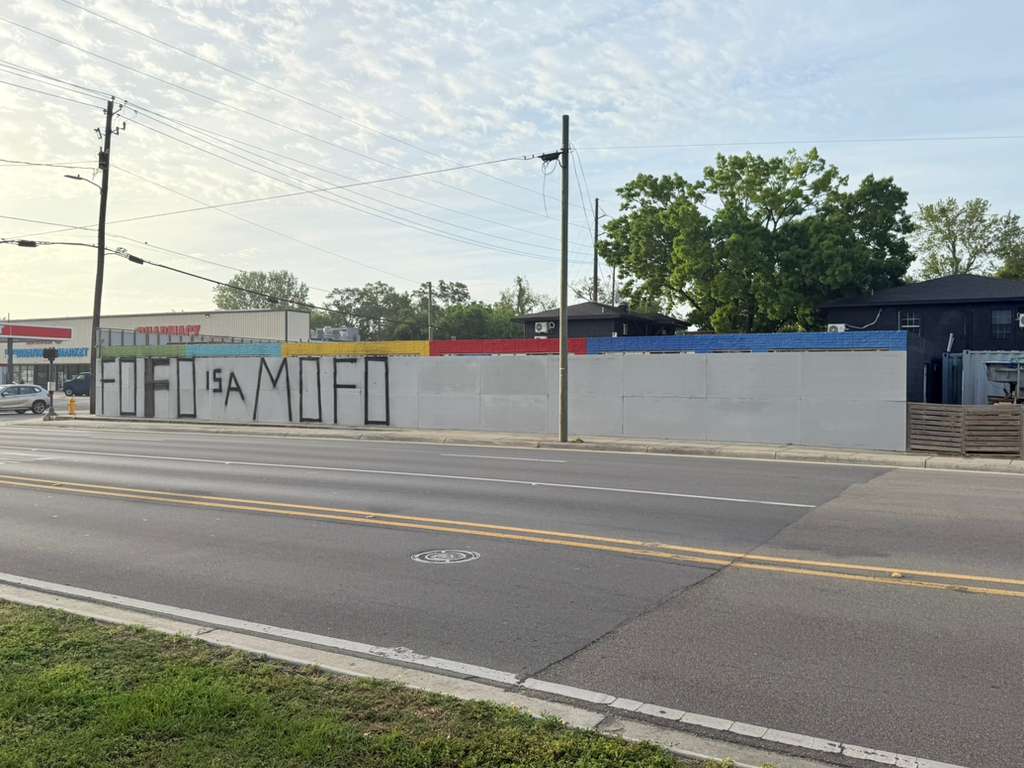
This is the painting. “FOFO IS A MOFO.”
Painted on the side of 929 Division Street, Biloxi, Mississippi, on March 31, 2026. Protected political speech under the First Amendment to the United States Constitution.
Commentary on a public official’s fitness for office—the most protected category of expression in American law.
Within hours, the Biloxi Police Department’s Criminal Intelligence Unit issued a department-wide bulletin targeting the painter.
His Social Security number distributed to every officer. His photo pulled from Facebook.
Instructions to “develop probable cause.”
For paint.
There are now more than 70,000 readers watching this website.
The Burger King article established the audience. This article establishes the stakes.
And the five federal lawsuits, the FBI report, and the public court record establish that we are not writing editorials. We are building a case file—in public, in real time, under our own name.
The honest officers helped the FBI in 1983. Someone inside the department helped us in 2026.
The tradition of courage inside the Biloxi Police Department is older than the tradition of corruption. It just doesn’t get the headlines.
Until now.
Rise and Shine, FoFo
Margaret Sherry was a former councilwoman. She was about to expose corruption in Biloxi’s city government.
On September 14, 1987, she and her husband—a sitting state circuit judge—were murdered in their own home. Shot to death.
Because she was going to do what this website does every single week.
That is the history of this city. That is what happens—what happened—when you expose the people who run Biloxi.
The Dixie Mafia’s answer to criticism was a hit squad. A contract killing. Bullets in a living room.
FoFo’s answer to criticism is a CIU bulletin.
Progress, we suppose. At least nobody got shot. Yet.
But the reflex is the same. The institutional DNA is the same.
When someone criticizes the people who run this city, the first response is not to address the criticism. It is to deploy the machinery of government against the critic.
In 1987, the machinery was a hitman. In 2026, the machinery is a police intelligence unit distributing Social Security numbers and instructions to “develop probable cause” against a man whose crime was owning a paintbrush.
Same city. Same family. Same reflex. Different tools.
In 1983, the FBI stopped it.
The FBI designated the Harrison County Sheriff’s Office a criminal enterprise, indicted the sheriff, and broke the Dixie Mafia’s grip on law enforcement. It took federal intervention because the state of Mississippi had no mechanism to do it itself.
The FBI has our report. The lawsuit is filed. The public is watching.
And the CIU bulletin—the document that was supposed to stay inside the department, the document that was supposed to be the quiet knife in the dark—is now a federal court exhibit, published on a website with 70,000 readers, reported to the same FBI field office that dismantled the Dixie Mafia.
FoFo, let us explain something to you in terms even you can understand.
The undersigned is 33 years old. You are north of 80.
We have five federal lawsuits. An FBI report. A readership. A law degree in progress. A publication that reaches more people than your city council meetings ever have or ever will.
And a paint budget that, frankly, is quite reasonable.
We have time, Mr. Mayor.
Do you?
Rise and shine, FoFo.
The undersigned has time.
Documents Referenced
- CIU Bulletin — Biloxi Police Department Criminal Intelligence Unit, March 31, 2026 (Exhibit C, Case No. 1:26-cv-00094-HSO-BWR)
- Petrini & Fusco v. Glavan et al. — Federal civil rights complaint, U.S. District Court, S.D. Miss., Case No. 1:26-cv-00094-HSO-BWR (filed April 1, 2026)
- FBI.gov — “Dixie Mafia: Biloxi’s Wicked Web of Corruption” (FBI History, Famous Cases)
- City Council Meeting Recording — March 3, 2026 (City of Biloxi YouTube, Video ID: G0adfk2i9KA)
- U.S. v. Gaston, Williams, et al. — Mississippi Delta FBI sting, October 2025 (DOJ press release)
- U.S. v. Dedmon, Elward, et al. — Rankin County “Goon Squad” federal sentencing, 2023–2024 (DOJ press releases)
- Mississippi House Bill 691 — Police misconduct investigation authority, signed May 2024
Have Information?
If you have information about police misconduct, CIU bulletins, or corruption in Biloxi, we want to hear from you.
Contact: tips@peoplevsbiloxi.com
All communications are confidential. Mississippi Shield Law § 13-1-253.
Official Response Invited
Chief De Back, Mayor Gilich, and all named defendants are welcome to submit a signed rebuttal for publication with equal prominence. We will post it in full, unedited. contact@peoplevsbiloxi.com